
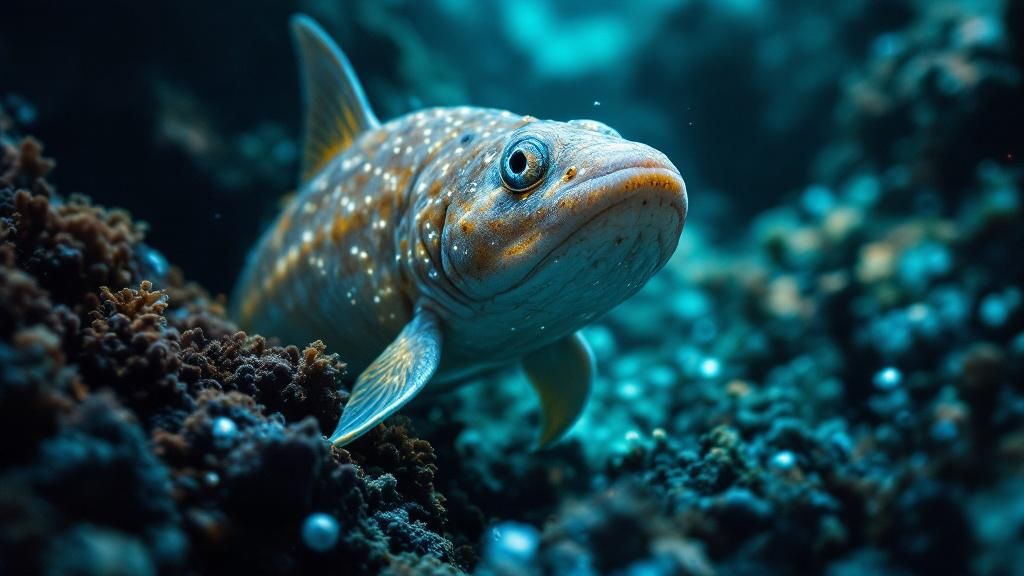
In a landmark discovery that reshapes our understanding of life’s limits, global scientific collaborations have identified many previously unknown species inhabiting the planet’s deepest ocean trenches. These exceptional life forms, dwelling in crushing pressures and perpetual darkness kilometres beneath the surface, reveal nature’s extraordinary capacity for adaptation. This article investigates the compelling discoveries from expeditions to the world’s most extreme aquatic environments, examining the unique characteristics of these newly discovered creatures and what their existence tells us about the durability of life in Earth’s most inhospitable regions.
Remarkable Discoveries in Profound Environments
The latest expeditions to the most profound underwater canyons have yielded remarkable findings that substantially transform our understanding of biological adaptation. Research teams working at pressures exceeding 10,000 metres have identified species not previously recorded by science, thriving in conditions that would instantly prove fatal to most land-based creatures. These findings underscore the extraordinary durability of life, demonstrating that evolution has furnished certain creatures with exceptional biological adaptations enabling existence in Earth’s most inhospitable environments.
Among the most remarkable discoveries are light-producing creatures displaying remarkable light-producing capabilities, alongside peculiar crustaceans and fish varieties displaying distinctive structural characteristics. Scientists have discovered gelatinous creatures with transparent bodies and distinctive sensory structures, suggesting evolutionary routes substantially different from shallow-water counterparts. The diversity and abundance of life at these profound depths challenge earlier beliefs about the ocean’s biological limitations, leading scientists to reconsider our understanding of where sophisticated organisms can flourish.
These observations hold significant implications for our understanding of life’s essential requirements and boundaries. The newly discovered species display adaptations including specialised proteins operating under intense pressure conditions, enhanced metabolic efficiency in nutrient-poor environments, and unique genetic expressions. Their presence offers important understanding into extremophile biology, possibly shaping forthcoming investigations into life’s potential beyond Earth and enhancing our recognition for the ocean’s position as a treasure trove of living diversity.
Modifications for Survival in the Abyss
The recently identified species living in the deepest ocean trenches have evolved extraordinary biological mechanisms to withstand conditions that would be fatal to most terrestrial organisms. These creatures have acquired remarkable physiological adaptations over millions of years, allowing them to flourish where pressure exceeds 1,000 atmospheres and temperatures stay near freezing. Their survival represents a testament to evolution’s ingenuity in fashioning life forms capable of utilising Earth’s most extreme environments.
Distinctive Biological Traits
One of the most notable adaptations seen in these ocean floor inhabitants is their altered cell composition, which prevents the immense pressure from harming vital biological machinery. Their cellular membranes contain modified lipid molecules that maintain flexibility despite severe conditions, whilst their proteins have developed to perform effectively under these challenging circumstances. Additionally, many species possess enlarged eyes or bioluminescent organs, permitting them to move about and transmit information in total blackness where sunlight cannot reach.
The biochemical functions of these creatures vary markedly from their shallow-dwelling kin, functioning at substantially diminished speeds to maintain energy reserves in this nutrient-poor setting. Many species demonstrate diminished growth rates and prolonged lifespans, constituting an evolutionary adaptation suited to the unchanging yet scarce conditions of the abyss. Furthermore, their skeletal structures tend to be less mineralised than surface-dwelling species, decreasing the energy cost of maintaining rigid frameworks.
- Specialist protein compounds withstand extreme pressure conditions successfully
- Light-producing organisms provides signalling in total absence of light
- Reduced metabolic rates preserve scarce energy reserves
- Flexible cell membranes protect against damage from pressure
- Enlarged sensory organs compensate for absent sunlight
Implications for Ocean Research
The discovery of these undiscovered species substantially alters our understanding of ecological diversity and biological systems. Scientists now accept that the oceanic trenches represent an entirely underexplored frontier harbouring numerous life forms yet to be documented. These results compel the scientific community to reassess current theories regarding the distribution of species, mechanisms of adaptation, and the limits of habitable zones. The consequences extend further than taxonomy alone, suggesting that biological resilience greatly surpasses earlier estimates and that Earth’s biosphere remains substantially unmapped.
Furthermore, these discoveries emphasize the urgent necessity for improved ocean protection initiatives and sustained commitment in abyssal exploration equipment. Understanding these deep-sea creatures could yield invaluable insights into the mechanisms of evolution, genetic adaptation, and future pharmaceutical uses. As environmental shifts jeopardise aquatic systems across the planet, documenting and studying these species becomes progressively vital for safeguarding the world’s natural legacy. The research illustrates our obligation to conserve these distant ecosystems and the remarkable creatures dwelling within them.
